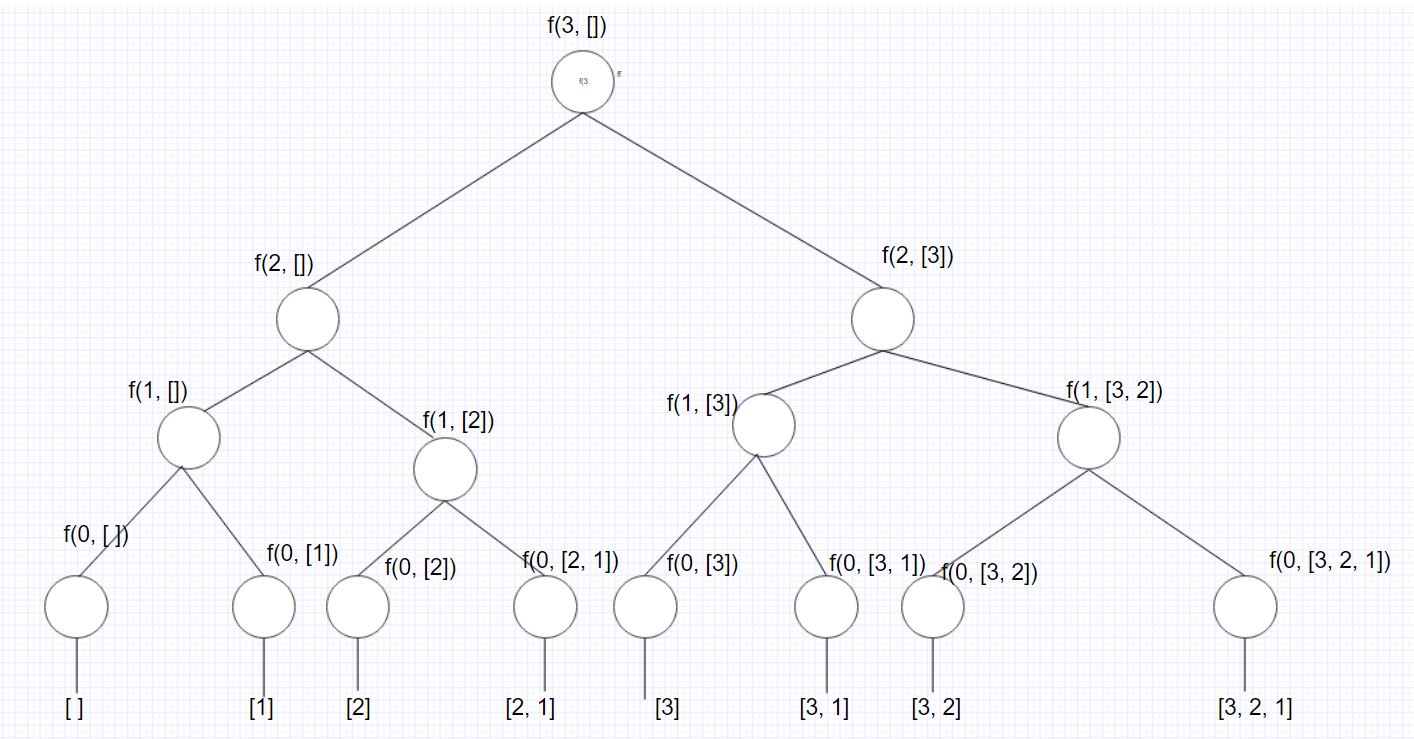
Few days ago, I came across a question on quora which goes like this:
Consider, the original example:
At first glance, I thought the problem is related to subset sum. But no, we are allowed to use single number more than once and permutations is allowed. So, we’ll be using the recursion just like subset sum approach with slight modification i.e we are allowed to take same item again and again.
But, before that let’s talk about how would you solve it without code?
We have a list of numbers

Here, we start with
For every state
Here is the complete code in Python:
How do you solve this programming problem? Imagine you want to find all permutations of 2, 3, and 7 that can add up to make 10. (Ex: 2, 2, 2, 2, 2; or 3 , 7).The question is basically asking us to represent sum using numbers from the array where a number can be used more than once.
Consider, the original example:
sum = 10We can use 2 five times to make sum 10. Also we consider
nums = [2, 3, 7]
7 + 3 and 3 + 7 both as solution candidates.At first glance, I thought the problem is related to subset sum. But no, we are allowed to use single number more than once and permutations is allowed. So, we’ll be using the recursion just like subset sum approach with slight modification i.e we are allowed to take same item again and again.
Solution:
The problem like this is easy to solve by recursion. Let’s try to visualize the solution recursively.But, before that let’s talk about how would you solve it without code?
We have a list of numbers
nums = [2, 3, 7] and we want to find all the combinations that make up the sum including the permutations.eg: [3,7] and [7,3] to make 10
- Start with sum 10 and an empty list.
- Include the first element
2to the list. Solve forsum == 10 - 2 = 8and[2]. - Include the second element
3to the list. Solve forsum == 10 - 3 = 7and[3]. - Include the third element
7to the list. Solve forsum == 10 - 7 = 3and[7]. - Solve subproblems with
sum = xand listansrecursively.
Here, we start with
f(10, []) and at every states we take {2, 3, 7} and add to our answer list such that sum is greater than or equal to the number.For every state
f(sum, ans) we have 3 choices(if num is less than or equal to sum):- Include
2to theansand solve forsum - 2 - Include
3to the ans and solve forsum - 3 - Include
7to theansand solve forsum - 7
             — f(8, [2]) // Take 2
   f(10, []) — f(7, [3]) // Take 3
             — f(3, [7]) // Take 7
The nodes marked in gray in the recursion tree are the answers to the problem.Here is the complete code in Python:
def solve(sum, ans):
    # If sum becoms 0 we have found the required list
    if sum == 0:
        print(ans)

    # Include every other element to make the sum
    # Number that is included also can be included
    for elem in nums:
        if sum - elem >= 0:
            solve(sum - elem, ans + [elem])

# We want to make the sum from list nums
nums = [2, 3, 7]
sum = 10

# Call solve with sum and an empty list
solve(sum, [])
Output:
[2,  2,  2,  2,  2]
[2,  2,  3,  3]
[2,  3,  2,  3]
[2,  3,  3,  2]
[3,  2,  2,  3]
[3,  2,  3,  2]
[3,  3,  2,  2]
[3,  7]
[7,  3]